Chef led. Eight venues. One guest profile.
ART has backed chefs to build their own restaurants since 2013, from a burger shop in Hereford to a ramen bar in Birmingham. Running eight of them meant multiple software providers that never spoke to each other. Edwin Kirk put everything onto Stampede and kept Square on the tills. Here is what he sees from head office, and what the teams see on the floor.
The short version
- ART Hospitality is a chef-led restaurant group running eight venues across Hereford, Worcester, Birmingham and Gloucester, founded in 2013 by brothers Edwin and Dorian Kirk.
- Stampede replaced Airship as ART’s marketing platform and ResDiary as ART’s booking system, along with the separate supplier ART used for guest Wi-Fi.
- ART kept Square as its till. Stampede’s two-way Square integration returns each table’s spend to that guest’s own profile, alongside the booking, the Wi-Fi sign-in and the review.
- Table bookings, ticketed events, guest Wi-Fi, reviews, email marketing, loyalty and Google Reserve all run on Stampede across all eight ART venues.
- Edwin Kirk’s stated goal is that floor teams recognise a booked guest before that guest gives their name, using the profile Stampede builds.
A group built around its chefs.
ART Hospitality started in Hereford in 2013 as A Rule of Tum, run by brothers Edwin and Dorian Kirk. The model they landed on is unusual enough that they gave it a name: the chefpreneur. Rather than hiring a head chef into a group format, ART backs a chef to build the thing they actually want to cook, then gives them the infrastructure to run it as a business.
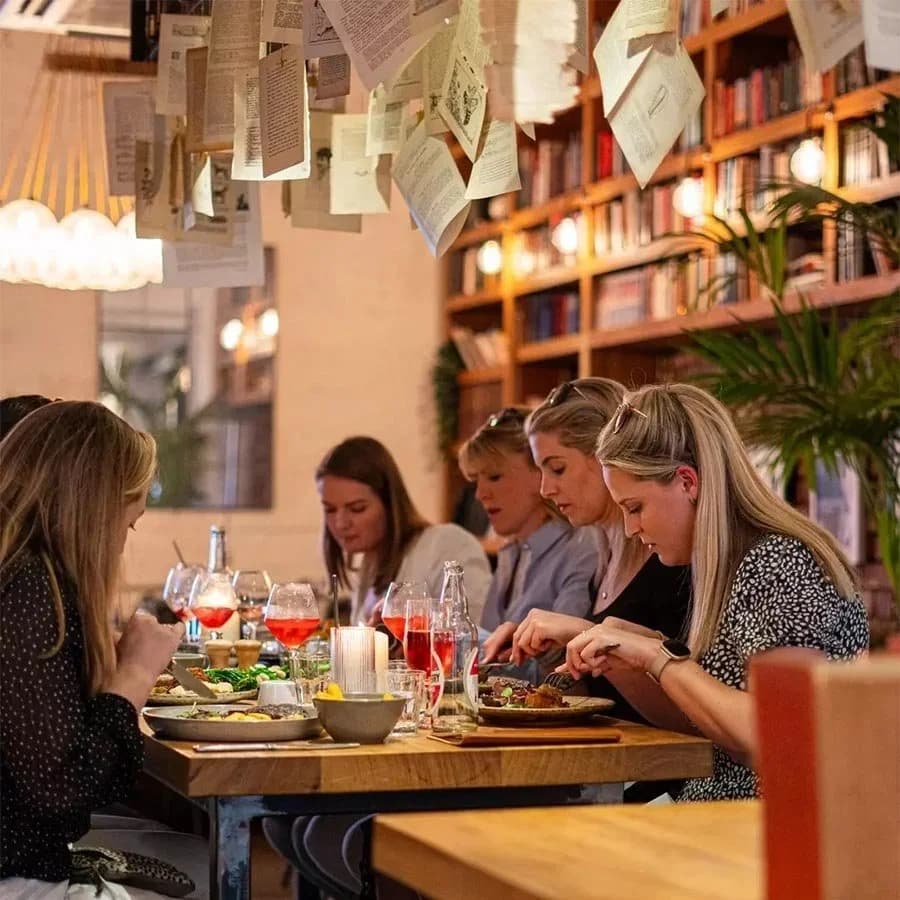
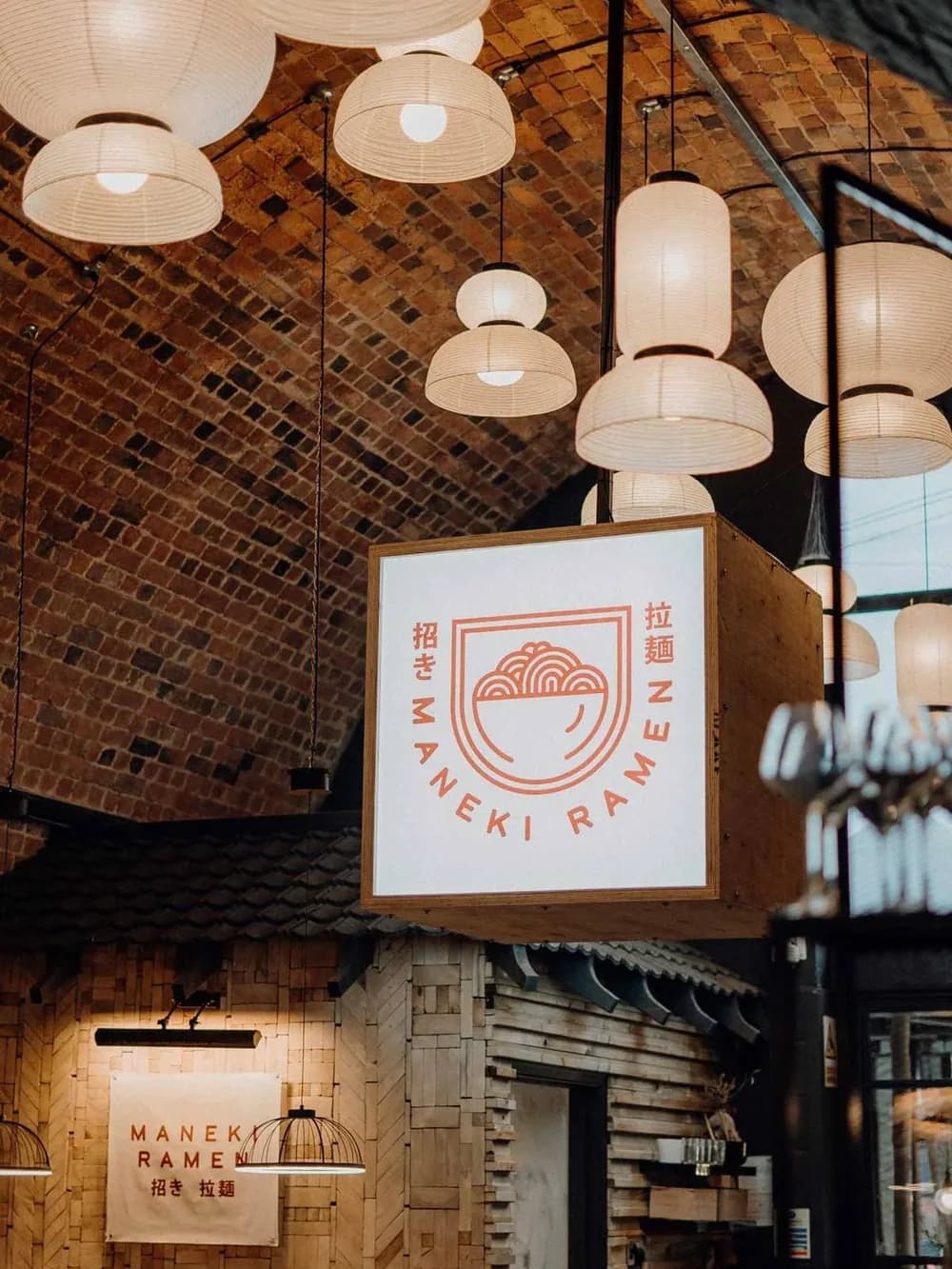
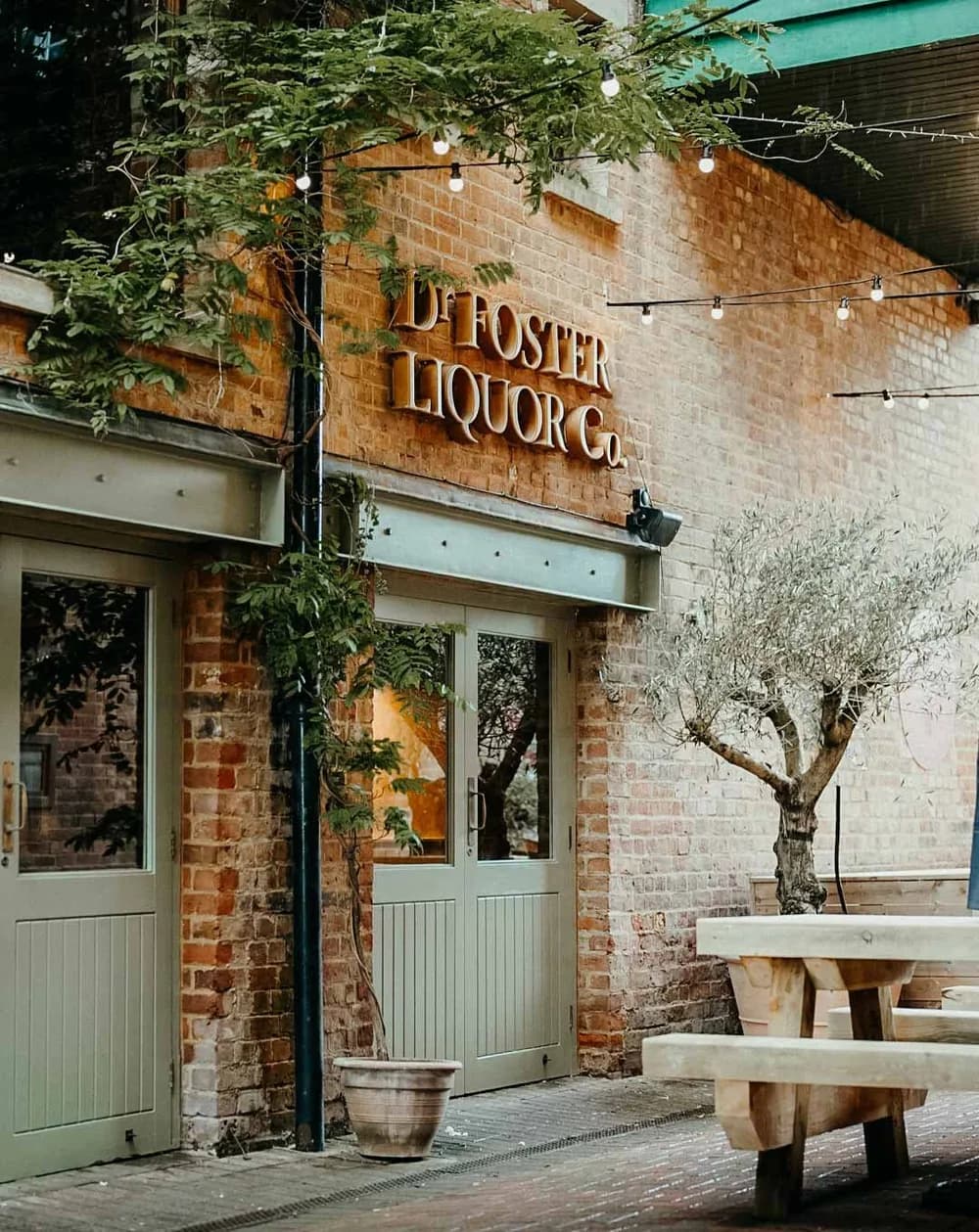
The chefpreneur model shows in how little the venues look like each other. The Bookshop is a modern British restaurant in the middle of Hereford. Burger Shop does one thing in Hereford and Worcester. Leaven is Italian family dining, The Yard is communal eating. Maneki Ramen began as a chef's lunch break habit, became a pop-up with ART behind it, and is now a bricks-and-mortar restaurant in Worcester and another in Birmingham. Dr Foster is a Gloucester pub the group took back to a gastropub. Dish by ART does the events.
Eight rooms, four towns, six different ideas of what a restaurant is. What the venues do share is guests, and for a long time those guests existed in three different systems at once.
Multiple providers and no synergy.
Before Stampede, ART ran the group the way most multi-site operators still do. Until ART moved to Stampede, Airship handled the group's marketing and ResDiary took its bookings, with guest Wi-Fi from a third supplier. Every one of those products worked. None of them knew the others existed, and each one came with its own contract, its own login and its own person to chase when something went wrong.
“You start having to deal with multiple different people. But more importantly, the synergy between the software is just not at the standard you need for the modern customer, and even the modern team member.”
The true cost never appeared on an invoice. One guest would book an event through a ticketing site nobody in the group could see into, then eat and drink on a till that recorded a basket against nobody in particular. Another would walk in and never appear in any system at all. Ed's view is that the fragmented stack is usually defended with an argument he does not accept.
“The whole fragmented tech idea, that you cannot have best in class in multiple areas at the same time, is something Stampede is trying to prove otherwise. And doing it successfully, as far as I can see.”
Marketing, bookings and Wi-Fi had been three suppliers. Now they are one platform with one guest record. Reviews, loyalty and the Square till now read from the same place.
Three contracts became one.The quietest launch he's seen.
While Ed did not run the rollout himself, his general managers at his eight venues did. What happened during the launch was invaluable to a busy operator like Ed.
“I did not receive a single call from any of my team saying I have got a problem with it in the first few weeks. There have been feature requests we have worked on together, but you resolve those quite quickly. When you do not hear something after a software launch, that is very good.”
Ed is candid that adoption in hospitality is slow by nature, and that the group is still not using it to its full capability. Still, he does not hold that against the product. “Even today I was looking at Apple Notes and how much more it can do than I ever thought was possible. That is not Apple's fault, that is my fault.” The bookings side, he says, was simple to set up, and already does things he does not see done well elsewhere: upsells, side sales, cross-pollination between the venues, and ticketed events running inside the same portal as everything else.
“When you have to go outside your portal for an event and use a ticketing site, that is another whole thing to train your staff on. And because the marketing is not picking up how much that customer spent, we have no idea whether they are a regular. They literally come in through a different portal.”
It has to feel best in class.
Ask Ed for the headline benefits and he gives two before he gives any numbers. The first is how the software feels to use, which is not a soft point when the people using it are twenty-two and have never known a badly designed app.
“The younger generation are much more tech savvy and they expect it. They want it to be more like an iPhone feel. The touch and feel of using the software is much, much better, especially when you integrate it all together. You have not got all the clunky bits.”
The second benefit is what happens to the bits that are still clunky. Ed's complaint about the rest of the industry is that the people who build the software are unreachable by the people who use it, and that the fixes which look simple from the floor turn out to be simple from the engineering side too, if anyone would listen.
“You innovate at a rate I have never seen in a software company. Your engineers listen to the ideas that come from the ground, from the people running it and using it every day.”
Square on the counter, Stampede behind it.
ART takes payment on Square and had no intention of changing that. Ed is precise about why: the customer-facing side is smooth, the pricing is good, and a till that front of house enjoys using is not something you trade away lightly.
“Square are a very good product, very well priced, and they have a very smooth front of house customer-facing deck, which is really important to me.”
What ART wanted was for the spend that till captures to reach the rest of the business, which is the job Stampede's integration does. The integration runs both ways. A booking made on Stampede carries through to the table, and what that table spends comes back onto the guest's record: basket size, items, how often they come, what they bought at Christmas. The till stays exactly as it was for the person holding it, and the guest record gains everything the till knows.
“Your ability to almost know other people's software better than they do themselves is something that comes through quite strongly.”
Know your customer, on the booking sheet and in the database.
Here is where the group is actually heading. Ed has a name for it inside the business, borrowed from banking and pointed at the dining room: KYC, know your customer. Ed's ambition is not a segment within a marketing tool. Ed wants the person who greets a guest at the door to already know who that guest is before they identify themselves by name.
“I want to reach a point where every time someone walks into one of my restaurants, anyone who has booked or bought a ticket or pre-ordered anything, we will know, and we will have it on their booking sheet.”
The team, he says, should understand who that customer is and what their preference is, and be able to offer something individual to them. A favourite bottle of wine on the table. “That is when we can really start making massive changes.” He is clear that the group is not there yet, and equally clear that the blocker is training rather than data, because the data has already arrived.
Everything lands on one record: the booking, the basket from Square, the event ticket, the review, the campaign they opened. Walk-ins who never book still appear, because the Wi-Fi sign-in picks them up.
Example profile. Figures illustrative.“On their customer profile we can see who has responded to a Stampede email campaign or a messaging campaign. If we can see who is responsive, and the team learn it quickly enough, then when that customer comes in we can talk to them as if we know what they are doing. Which we do. That is magic.”
The review turns up on the till.
ART ran a review tool before, and Ed says that the feature list is not wildly different. What is different is where the review ends up. Google reviews sync into Stampede across all eight venues, and because the guest is already a profile, the review attaches to them rather than sitting in a separate inbox. The group averaged 4.7 stars across the venues in the month we looked at.
“It is the richness of the data, because it is all in one. When someone has left a review and we know who they are, that comes up on our tills. We can see they have left a four star or a three star, alongside our own notes, if we have resolved an issue for them.”
“Every point of contact, online, offline, outside the building and inside the building, now becomes part of that profile.”
A question, then a report.
The newest part of the platform for ART is the one Ed reaches for when he wants a straight answer. Ed can ask Stampede a hospitality question in plain English and have it compile the reply from the group's own data, rather than exporting three spreadsheets and reconciling them himself.
“I have just pulled up information for the last quarter on one of our restaurants, really looking to find any weaknesses. How many subscribers have we got, what are the click-through rates, what is loyalty looking like, what are the bookings looking like, how many discounts are we giving out. All of that is easily compilable into a report that gives me an idea fairly quickly. Are there any big holes?”
The chat reads the group's own graph of guests, bookings, Square baskets, Wi-Fi sessions and campaigns, which is why it answers in a second rather than running a report overnight. One venue, or all eight.
Example question. Figures illustrative.Alongside it, ART's account team has been building the group a single dashboard across all eight venues. For an operator whose numbers have historically lived in three products, the appeal is less about the chart and more about only having one place to look.
“Even though we have already got a lot of synergy, I am really excited about making it even more seamless behind the scenes for customers.”
Why they expect to stay.
Ed has done the arithmetic that any operator replacing three contracts with one has to do, but the argument he cares about most is longevity, and it comes from having been burnt. Switching a hospitality group off a platform it is embedded in is expensive and slow, so the decision that actually matters is whether the supplier will still be building in five years.
“I am always trying to partner with people who I think are going to be great partners for the long term, simply because it is so hard to unpick yourself from a software provider once you are embedded. I really believe there is longevity in Stampede. I have been with companies before that had stopped innovating, where nothing changed for years after they were acquired. I do not want a partner like that. The levels of tech change so quickly. You have to keep up.”
The same guest list, put to work.
Ed can see what the record is sitting on, and most of what excites him is the part the group has not switched on yet.
Loyalty and rewards
The part Ed says the group has not explored to its full depth yet. Points and vouchers built into the customer journey rather than bolted on beside it, on the same record as everything else.
Ordering from the table
QR ordering paid through Square, landing on the same guest profile. Ed's read is that restaurants weigh up self-service kiosks or QR and want neither, because both are clunky, expensive and another piece of tech to train on.
Birthday and win-back journeys
Automations that fire off the record itself: a venue-specific offer in the month of a guest's birthday, a two-email sequence for guests who have not been in for four months, and a follow-up on a cancelled booking.
SMS to a list that is already opted in
Every guest who signs in to the Wi-Fi or makes a booking can opt in to SMS, and a large share of ART guests already have. The channel is sitting there, fully consented, waiting on the first send.
“I am actually more excited about where we are going to get to.”
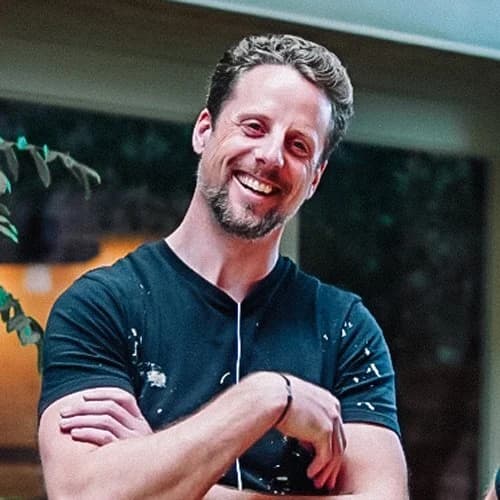
“Nowadays we are so spread out with all the different softwares. Actually having one central place where you have all your dashboards, and you can trust that data, is going to be gold dust.”